GUIDE
Christmas treasure hunt clues for a British house
Room-by-room Christmas treasure hunt clues in rhyme, by age, to turn Christmas morning into a proper hunt.
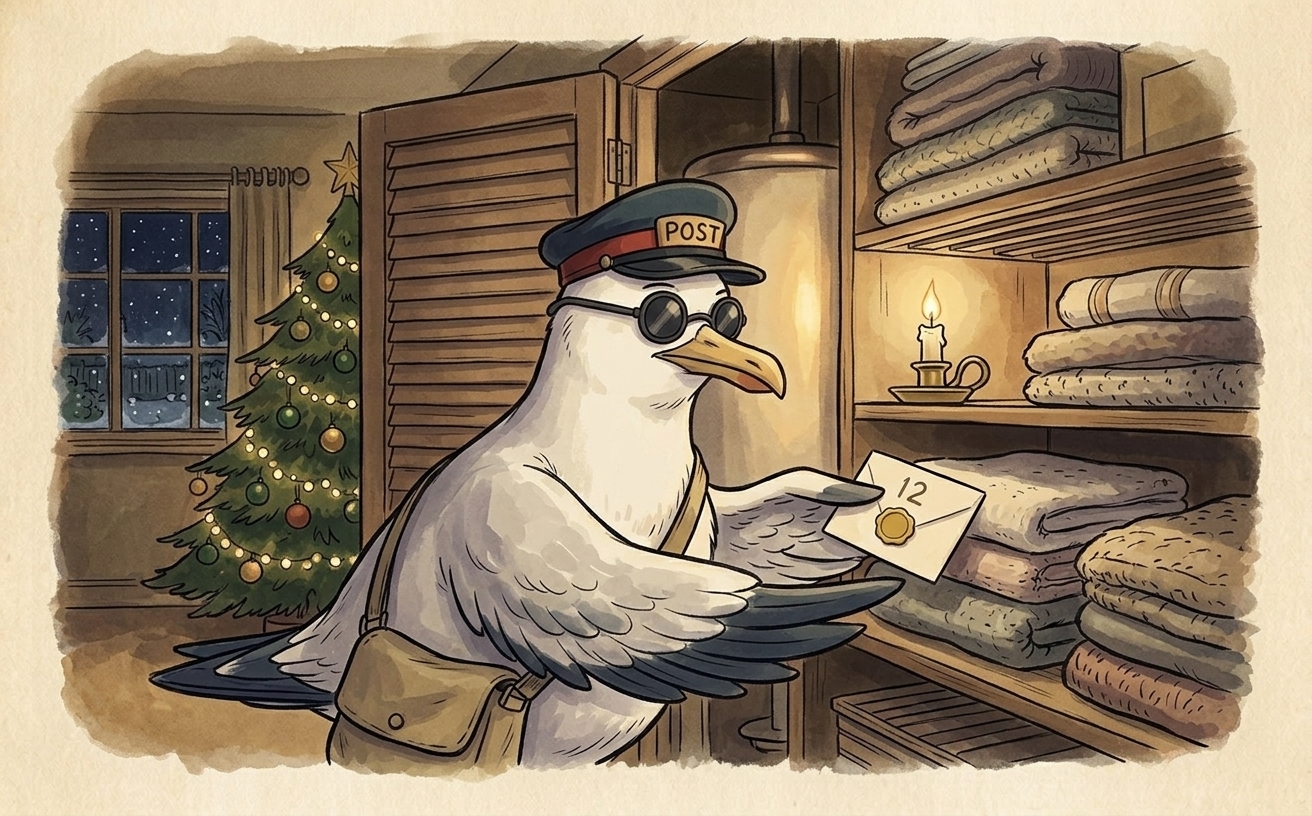
Christmas treasure hunt clues work best when they send children round the places a British house actually has: the airing cupboard, under the stairs, the welly rack, the boot of the car. Write each clue as a short rhyme that points to the next hiding place, keep the youngest hunters to four or five stops, and have the last clue lead to something small and already wrapped.
A treasure hunt turns ten minutes of present-opening into half an hour of pure joy, and it costs nothing but a few bits of paper and a bit of planning the night before. Here is how to write the clues, where to hide them, and what to do differently depending on the age of your hunters.
How to write Christmas treasure hunt clues
Each clue needs two things: a rhyme that is solvable, and a location the child already knows how to find on their own. Do not be too clever. The joy is in running to the next spot, not in standing puzzled in the hallway.
A simple structure works every time. Describe the room or object without naming it outright, give one clear clue word that narrows it down, and end on a short rhyming couplet so it feels festive rather than like homework.
For the airing cupboard: ‘Where towels stay toasty and warm as toast, look here next for your Christmas post.’
For under the stairs: ‘Where coats and boots and hoovers hide, your next clue waits just inside.’
For the fridge: ‘Open me up, it is rather chilly, your next clue sits beside the Brussels and the jelly.’
For the boot of the car: ‘Where shopping bags and wellies go, pop outside through frost and snow.’
Keep the rhymes short, two lines is plenty, and read each one aloud before you commit to it. If it trips your own tongue it will trip theirs.
Christmas morning treasure hunt by age
Under fours do best with three stops and pictures rather than words: a drawing of a fridge, a drawing of wellies, a drawing of the Christmas tree. An adult reads the clue aloud and the child does the finding and the laughing.
Five to seven year olds can read simple rhymes themselves, especially with a grown-up nearby for the tricky words. Four or five stops is enough. Keep every clue inside the house so nobody is hunting in the dark or the frost before breakfast.
Eight to ten year olds enjoy a proper puzzle: a clue that names two things so they have to work out which room has both, or a clue written partly in riddle form. Five to seven stops will hold their attention, and letting an older child read the clues to a younger sibling gives them a job and keeps the morning calm.
Older children, ten and up, like a longer hunt with a genuine twist in the middle, perhaps a clue that sends them back to a place they have already visited, or one that needs a torch for somewhere dim like under the stairs. A joke prize partway through, before the real one at the end, keeps them going.
Best places to hide treasure hunt clues in a British house
The airing cupboard is a classic first stop, warm and a little bit secret to a small child.
Under the stairs works well for a middle clue, especially if there is a torch or a light pull involved.
The fridge or the biscuit tin gives a nice domestic surprise, and a clue tucked beside the selection box earns a laugh.
The boot of the car is a good one for the end of the hunt or for families with a drive or garage, since stepping outside, even briefly, builds a bit of ceremony into the final reveal.
The Christmas tree itself, tucked among the baubles, is an easy final stop that brings the hunt full circle to where the presents already are.
Avoid anywhere with sharp edges, anywhere a very young child could reach something hot, and anywhere that needs a key or takes longer than a few seconds to open. The whole point is momentum.
How to set up a treasure hunt the night before
Write your clues on separate bits of card so nobody can read ahead by accident, and number the back lightly in pencil so you remember the order once you are hiding them half asleep at eleven at night.
Walk the route yourself before bed. If a clue says ‘look under the stairs’ and the hoover is blocking the door, move the hoover, not the clue.
Tell any other grown-up in the house where everything is hidden, in case you are the one still wrapping presents when the hunt begins.
Leave the first clue somewhere obvious, propped against a stocking or tucked under a plate at breakfast, so the hunt starts the moment everyone is ready rather than with everyone standing about wondering where to begin.
Christmas morning treasure hunt that uses your own voice
A written clue gets solved and forgotten by lunchtime. A Treasure Hunt in an Envelope from Tap-A-Post gives you two to five numbered clue cards, each sealed with a little gold wax seal that plays your own voice reading the riddle when it is tapped with a phone, or scanned if the tap is shy. The last riddle leads to the treasure. It posts to you with a note of which card goes where, so you still do the hiding yourself, but on the morning it is your own voice, slightly daft and full of clues, that sends them from the airing cupboard to the fridge to the tree. It is a small thing to add to a morning that is already full, but it is the one bit of the hunt that pen and paper cannot do.
How many clues should a Christmas treasure hunt have
Three to five stops suits children under seven, and five to seven stops suits children eight and older. Fewer stops than that and the hunt is over before it has properly begun, and more than seven tends to lose smaller hunters partway through.
What should the final treasure be
It does not need to be large. A small wrapped gift, a book, or even a token that leads to one more present under the tree all work well. The hunt itself, not the size of the prize, is what children remember.
Can you do a treasure hunt in a flat with no garden
Yes, easily. Use the airing cupboard, under the sink, inside a wardrobe, the fridge, and a kitchen cupboard as your five stops, and the whole hunt fits comfortably indoors without ever needing a garden at all.